
Key takeaways
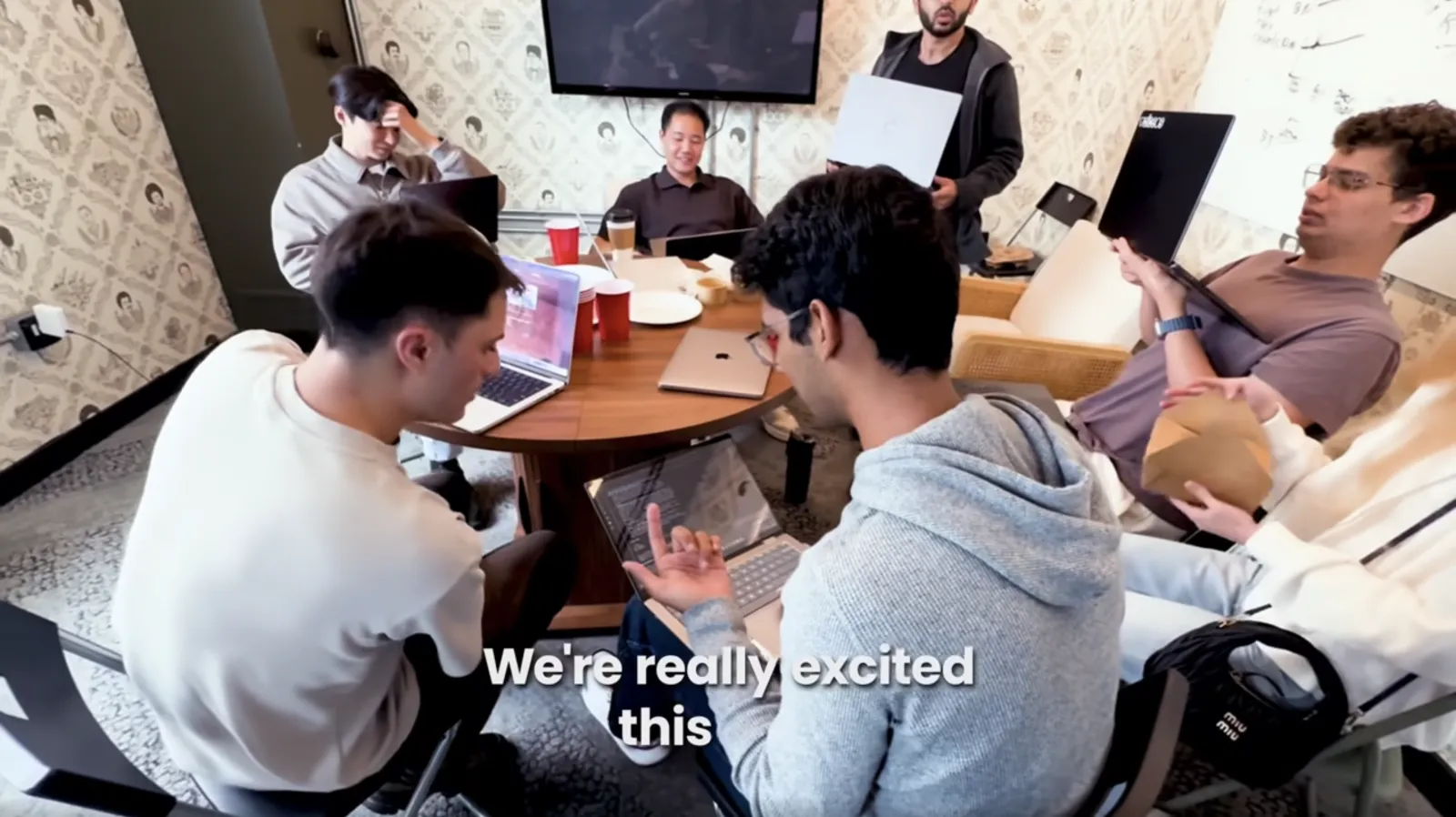
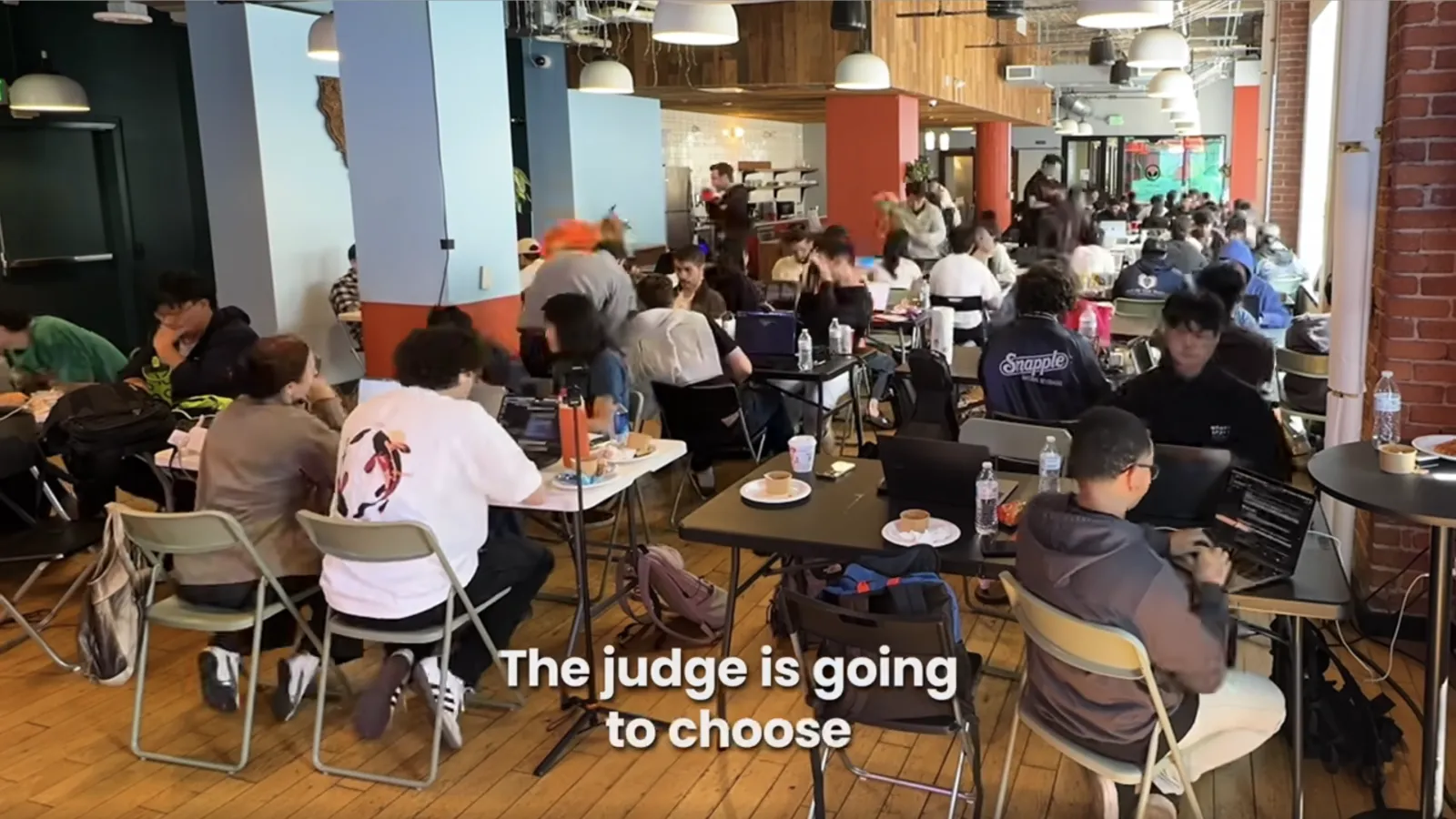
- More than 600 people signed up, and more than 200 builders spent six hours creating with VoiceOS in one San Francisco room.
- Projects ranged from Codex, Claude Code, Stripe, Hacker News, Spotify, and CRM integrations to a mobile VoiceOS and voice-powered food delivery.
- The hackathon showed why an App Store matters: the most valuable voice workflows are too specific and too numerous for one product team to invent alone.
- VoiceOS gives those apps a stable MCP-based contract, native confirmation and result cards, explicit permissions, and a shared voice interface on Mac and Windows.
600+ signups. 200+ builders. One room.
The first VoiceOS App Store Hackathon in San Francisco began with a question: what happens when you give builders a universal voice layer and let them decide what it should connect to next?
The answer arrived fast. More than 600 people registered. More than 200 builders made it into the room. They had six hours to turn an idea into something another person could actually use by speaking. As Kai wrote after the event, the projects were impressive, but the community around them was the part that stayed with us.
600+
signups
200+
builders
6h
to ship
A look inside the hackathon from Jonah Daian. Watch or discuss it on LinkedIn.
People built the apps they wished already existed
A normal app store starts with categories. This one started with intent. Builders looked at a task they repeat, a service they live in, or a dashboard they constantly reopen and asked: what would this feel like if I could simply say what I wanted?
That produced a catalog no roadmap meeting would have predicted. Some projects were broadly useful. Others were intensely personal. Both are exactly what a voice operating system needs.
Codex and Claude Code, dispatched by voice
Builders connected coding agents directly to VoiceOS. A spoken request could become a background coding task, with progress and results returning to the same voice-first surface instead of another terminal window.
A custom Stripe notch for live MRR
One team turned Stripe data into a focused revenue card inside the VoiceOS notch. Ask how MRR is moving and the answer appears as a compact graph, not a pile of tabs and dashboard filters.
Hacker News in a glanceable card
A Hacker News integration fetched the current stories and rendered titles and scores as a native VoiceOS result. It became the reference example for how a small MCP tool can feel like a real voice-native app.
Spotify without leaving your work
Builders connected playback, track selection, and volume controls so music could be managed conversationally. The important part was not play or pause; it was keeping the interaction inside the same universal voice layer.
The CRM people actually use
Instead of waiting for a generic connector, teams wired VoiceOS into their own customer systems. They could retrieve records, update fields, and trigger the workflows that matter to their company.
Ideas we would not have planned ourselves
The room also produced a mobile version of VoiceOS, voice-powered food delivery, and a voice tool designed to identify possible early signs of dementia. An open builder surface expands the product beyond one team's roadmap.
The App Store is how VoiceOS becomes bigger than VoiceOS
Voice is most useful when it reaches the software a person already depends on. That is why the VoiceOS App Store is not a gallery of prompts. Each app exposes real tools and data to the agent, then renders the confirmation or result inside the VoiceOS notch.
The hackathon made the strategy tangible: VoiceOS supplies the universal interface, while builders supply the long tail of actions. A founder can connect the CRM their team uses. A developer can hand a task to Codex. A music fan can control Spotify. A finance team can ask Stripe for the metric they care about and see the graph immediately.
Product Hunt · August 9, 2026
#2 Product of the Day
The VoiceOS App Store launched as a home for voice-native apps that live in your notch.
Under the hood: a stable contract, not a one-off plugin
The integration update was designed around one rule: an app written today should keep working as VoiceOS evolves. Every integration carries a versioned manifest that declares its identity, runtime, authentication, permissions, tools, and confirmation interface. VoiceOS reads that contract and wires the app into the agent.
Run it your way
Local MCP for on-device tools, remote MCP for hosted services, and a hosted runtime path for shareable apps.
Ask before acting
Declarative confirmation cards let people inspect and edit arguments before a tool runs.
Show the result
Glance blocks turn live output into lists, stats, key-value rows, charts, and other native notch cards.
Permissions are explicit. Network domains are allowlisted. Secrets are collected by VoiceOS and kept out of the agent transcript. Integrations that need a completely custom surface can use sandboxed widget HTML, while the trusted confirmation control remains owned by VoiceOS.
The SDK even scaffolds an AGENTS.md alongside the server and manifest, so a builder can point Claude Code, Cursor, or another coding agent at the folder and describe the integration they want. The VoiceOS integration guide and the Hacker News reference app provide the starting point.
Siri opened app actions. VoiceOS wants to open the whole layer.
Apple has moved in the same direction with App Intents. Developers can declare actions and entities that Siri, Spotlight, Shortcuts, widgets, and Apple Intelligence understand. That is meaningful progress: Siri no longer has to be limited to functionality Apple built itself.
But Siri is still a system controlled by Apple. Developers participate through Apple frameworks, Apple schemas, Xcode capabilities, and Apple platforms. The system decides where and how an intent appears.
VoiceOS is taking a broader route. Its integration contract is built on MCP, works across Mac and Windows, and can connect a public API, a local app, a coding agent, an internal database, or a tool one team made for itself. The ambition is straightforward: anyone should be able to connect any app, then make it usable through the same voice interface.
The community is the roadmap now
The biggest lesson from the hackathon was not that people can build quickly. We already knew that. It was that the next important voice-native app might be too specific for us to imagine and exactly right for the person who needs it.
Six hours was enough to turn personal frustrations into working software. It was enough for strangers to become teammates, for builders to compare approaches, and for a room to start feeling like a community rather than an audience.
That is the future we want for VoiceOS: not a closed assistant with a fixed list of tricks, but an operating layer that grows every time someone connects one more app to their voice.
Sources and further reading
- Jonah Daian’s hackathon video and post — LinkedIn
- Kai Brokering’s event recap — LinkedIn
- VoiceOS App Store launch — Product Hunt
- Build an MCP integration for VoiceOS — VoiceOS
- App Intents framework — Apple Developer
Frequently asked questions
What was the VoiceOS App Store Hackathon?
It was a six-hour builder event in San Francisco where more than 200 participants created voice-native apps and integrations for VoiceOS. More than 600 people signed up for the event.
What did people build at the VoiceOS hackathon?
Projects included Codex and Claude Code workflows, a Stripe MRR dashboard rendered in the VoiceOS notch, Hacker News and Spotify integrations, custom CRM actions, a mobile VoiceOS experience, voice-powered food delivery, and a tool exploring early signs of dementia.
Can anyone build a VoiceOS integration?
Yes. A VoiceOS integration declares its tools, runtime, authentication, permissions, and confirmation interface in a stable manifest. Builders can run integrations locally, connect a remote MCP server, or use the hosted runtime as it becomes available.
How is the VoiceOS App Store different from Siri?
Apple lets app developers expose actions to Siri through App Intents, but that participation is defined by Apple frameworks and Apple platforms. VoiceOS uses an MCP-based integration contract designed for Mac and Windows, so builders can connect web services, local software, internal tools, and custom workflows to one voice layer.
Where can I see the hackathon video?
Jonah Daian shared a public video from inside the event on LinkedIn. The original post and playable video are embedded in this article.
Build the next voice-native app.
Connect the tool you use, give it a native VoiceOS surface, and make it available through voice.